Open Calls – Exhibited Work

The lock-down period enabled me to go through my scanned film catalogue and I have been responding to Open Calls. Most of these are in the United States where there are a number of Photographic Centres that run continual exhibitions through open calls. They are fantastic opportunities to get your work publicised and exhibited. There does not seem to be the same in the UK, at least not regular with a permanent exhibition space.

The first I entered was with the Midwest Center for Photography http://www.mwcponline.com.  They have some terrific themes that fit a lot of my work and they work so hard to come up with  many opportunities throughout the year and the quality is excellent.

Suburban Architecture

Housing Estate

http://www.mwcponline.com/suburban-architecture.html

Walkabout

Last Laugh

http://www.mwcponline.com/walkabout.html

2020 Juried Exhibition

Selected in three categories with a one Honourable Mention

http://www.mwcponline.com/2020-mwcp-juried-exhibition.html

Annual Ten x Ten 2019

SKY

http://www.mwcponline.com/eleventh-ten-x-ten.html
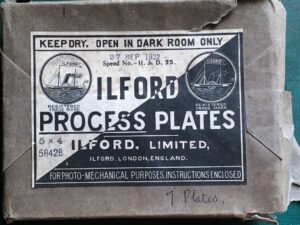


Vintage Photographic Plates

I love working with all photographic materials, often long past their expiry date. I acquired some old plates and one of the boxes was dated 1922.

Ilford plates dated 1922


With this box, my photographic brain somehow managed to estimate an exposure and development  time with one test  and the results are amazing for 98 year old film.


The garden fence provided a regular photographic feature during the lock down period with its subtle, weathered tones and texture.


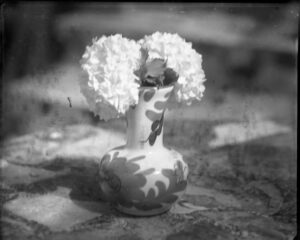
Vase


Another lock down subject.


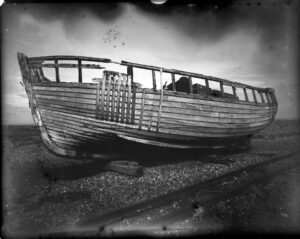
Wrecked Boat


Dungeness is a favourite place; other worldly, eerie, technically a desert  with a sense of beauty that brings. I have been a few times but want to spend  some days there.  There a many wrecks and dilapidated structures. In this case the ancient film adds another dimension to the aged wreck.


Lockdown Lumens

The bright spring days made perfect conditions for lumen prints. With this technique you use darkroom photographic paper (old works best), sandwich objects on it under a pane of glass and expose to the sun for an experimental period of time. The paper incorporates some developing agents so you get a self-developed image after exposure. You then rinse the paper in fixer to dissolve the unexposed silver halides, as is normal with any photo processing, and you have the final image.

The fixing changes the image tones slightly but makes it permanent. Variables to control the final image image include, the paper make and age, the type of fixer used, the exposure time. Moisture can effect the image, activating the inherent developing agent, so with plants you get variable effects.

Although the paper is for black and white prints the outcome is often a lovely shade of brown with beautiful variations showing the finest detail of the plant. You get an almost 3D view as the denser parts of the plant allow less light through and vice versa for the lightest, and parts not on contact with the paper will also create a shadow.

I like the uncertainty of the process and each print is unique. I find them very beautiful.

My last Polaroid

This the last sheet of Polaroid film I had, fitting perhaps with a skull. I found it behind the sofa! I thought maybe Georgia O’Keefe may have passed through but it was a previous occupier.

Last Polaroid – Death on the Line.


Frame Up

It’s coming together -more expense, a few hundred $ of framing materials. The living room is now the framing area. I’ve managed to create 30 acceptable prints 8×10 inch to display in matted 11×14 frames.


Southest USA series annotated with Cather quotes

I will also be displaying 4 prints from my New Mexico series , just framed these – looking  awesome, first time I have framed any of that series. No mat for these but I had to apply a fillet  around the glass to keep the print away from it. Doing everything as usual.

Granary Commerce – Cathedrals of the Land

In these parts there are many small towns or villages really, defined by a  small grid  of streets, some as small as maybe 10  streets with a population of around 20. Whatever the size most have a railroad running through it beside which  looms a massive grain processing  plant.

Grain Plant

The rest of the town consists of houses spread wide and the main street will have series of run down buildings, some closed down, many dilapidated, a small supermarket, a few other shops maybe. There will, however, be at least one church, in immaculate condition, set in well tended grounds, green lawn and flowered garden.

The number of rail lines is surprising and the fact they are still in use. Some are defunct and many removed but what remain criss cross the region connecting the towns but for freight only. The clue of course is in the grain plants the dominant architecture and centre of commerce. The towns grew from the railroad bringing people to the region to settle and farm and  developed further still to take  the produce away. The grain plants to me are like the cathedrals of the land, the symbols of commerce in this region.

Old grain plant – direct positive print.

My accommodation is the old railway depot next to this huge and active plant. One week the truck traffic increased dramatically, dust flying as they rolled in delivering their  produce; I think wheat as it was harvest time for that. One day, on my return to the depot, a line of wagons appeared alongside the  plant. They gradually disappeared down the line as each was filled. Then I only saw a few remaining, and thought the remainder had been hauled away when I was absent until one morning I was surprised to see a seemingly endless wagon load trundling away. I hadn’t realised they had all been backed down the line, hidden from sight by the plant.

Grain Plant – I’m in the old depot building by the trees on right.